Showing posts with label power tool safety. Show all posts

Monday, March 3, 2014

Understanding Your Power Tools: How Do Two Stroke Engines Work?

Understanding how your small engine works is critical to keeping it properly maintained and in working order. Two stroke engines can be especially susceptible to malfunctions, and learning about how they work will help you understand why.

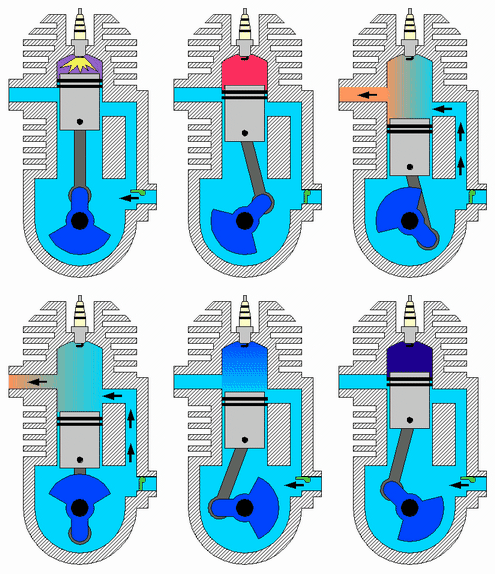
Two stroke engines are internal combustion engines. This means the combustion of fuel occurs in a chamber (in our case, a cylinder) to create force to another part of the engine (a piston). There are 5 steps that are a part of all combustion engines.

1. Intake: When both air and fuel enter the engine. In the case of a power tool, this would be oxygen and the mixture of gasoline and two-stroke engine oil that you use to fuel your power equipment.

2. Compression: When the air and fuel are compressed into a small volume. In a small engine, the piston forces the fuel and air into the cylinder creating compression.

3. Ignition: When the air and fuel are burned. This occurs by the spark plug creating a spark and igniting the fuel and oxygen.

4. Power: The ignition creates energy, and therefore, power. This pushes the piston back down, allowing it to turn the crankshaft and begins to repeat the process.

5. Exhaust: The leftover gas from the ignition of the fuel and oxygen mixture exits the engine. The process is then repeated.

Here is an illustration of how this five step process works:


You might be wondering how a two-stroke engine compares to a four-stroke engine as far as gas flow is concerned. In a two-stroke engine, the flow of gas requires a seamless flow pattern to avoid any turbulent mixing of the spent charge (combusted fuel mixture) with the new charge (fresh fuel mixture). Scavenging is critical in a two stroke engine to ensure that a fresh fuel and air mixture is used in the next cycle, as defined in the 5 step process above.


Scavenging is an essential part of having a properly running engine. When this function isn’t performed properly, exhaust fumes will combine with the fresh mixture, diluting the fresh air and gas of its combustibility and causing a poorly running engine.

The reason that this information is important for operators of two-stroke engines is because proper scavenging is more difficult to achieve in a two-stroke engine making them more prone to problems. Understanding the process will help you diagnose engine issues more easily and allow you to properly install your small engine parts.

Contact us if you have any questions about installing your new small engine replacement parts from HLSProParts.com and we will be happy to help where we can!

Monday, January 6, 2014

What to Check if Your Chainsaw Won't Start

If you've given the pull cord on your chainsaw a few pulls to no avail, you might consider bringing your chainsaw into a service center to get it looked at. Before you jump the gun on getting your chainsaw fixed, however, you should do a simple check of a few components on your chainsaw to determine if you really need to spend the money on a professional.

Check gas tank: Obviously if there isn't gas in the tank, your saw won't start, but your gas could also be old. If you haven't stored your chainsaw properly, you will have to get rid of old fuel and refuel your chainsaw. If you have a habit of letting your chainsaw sit for long periods, add Star Tron Enzyme Treatment to your gas so that it won't go bad as quickly.

Check spark plugs: An old spark plug is a cheap and easy fix, so you can easily change it without getting a professional involved. Check your chainsaws manual for the type of spark plug you need. There is a good chance it is a Bosch WSR6F.

Check air filter: If your air filter is clogged, your engine might not be getting the air it needs to run. Usually you can simply clean your air filter with a brush or compressed air to get it working properly, but if it is damaged you will want to replace it as soon as possible to avoid getting debris in your engine.

Clean your chainsaw: You will also want to clean your chainsaw and make sure there isn't any extra debris interfering with starting it. Check out our chainsaw cleaning guide for instructions on how to properly clean your chainsaw.

If your saw still won't start, it might be time to bring the saw into a professional that can check out your carburetor, fuel lines, timing and compression and get your saw up and running.

HLSupply carries a wide selection of chainsaw parts and supplies for trusted brands including Stihl, Husqvarna, Poulan, Jonsered, and more.

Tuesday, October 22, 2013

Cutting Wet Wood with a Chainsaw

Winter is rapidly approaching, and with it, wet conditions. Between autumn rain and eventually winter snow, working with a chainsaw in wet weather is inevitable. Here are a few tips for cutting wet wood with a chainsaw:

  • Cutting wood in rain or snow is okay for your saw: If you're nervous about your saw getting wet, don't worry. Gas powered chainsaws are perfectly okay to use in wet weather; the same is true for the log itself. Cutting through wet wood is fine for your chain and bar, though there might be some extra build up from wet saw dust. It's nothing you can't clean off with a rag, though.
  • Check your air filter: Speaking of wet build up, your engine's air filter could potentially be subject to wet debris getting caught in it. If the engine feels like it's not running correctly or it's struggling, check the air filter for any debris.
  • Be wary of slippery conditions: Obviously when surfaces are wet (or icy), things can get slippery. It's important to make sure you have solid footing when you're working in the rain or snow and make sure you have a solid grip on the saw at all times.
  • Use weather appropriate clothing & protective equipment: Wet weather boots and gloves with extra grip will go a long way in avoiding any mishaps. Wearing warm and water resistant clothing will also ensure that you're comfortable and can stay focused on the job.
  • Use the correct type of chain for frozen wood: Not all chains serve the same purpose, and for frozen logs you will need one with semi-chisel teeth. These rounded teeth cut at a slightly slower pace, but you won't have to stop and sharpen your chain in the middle of a job because your chain is dull. Check out our blog post on chainsaw teeth for more information on chain types.
  • Be wary of debris frozen to the bark: Cutting through dirt and rocks won't go well for your chainsaw chain. Make sure the logs you're cutting don't have a lot of debris frozen to them, particularly on the bottom of the log where you wouldn't see it.

Here are some things to consider before sharpening a chainsaw with a round file.

HLSupply.com provides quality aftermarket chainsaw parts from both new and discontinued chainsaws, and also carries a variety of parts for other power equipment including blowers, concrete saws, and rammers.

Tuesday, May 21, 2013

Power Chainsaw Safety Tips

When operating any power tool, it's crucial to always take proper safety precautions. This doesn't only pertain to proper use of the tool, but also to maintenance and preparation as well. Chainsaws are among the more dangerous power tools, but with proper operation and precautions, there's a limited chance of something going wrong. Read on to learn how to properly operate your chainsaw.

Safety Gear When Operating A Chainsaw

Safety gear is a must when operating a chainsaw. This includes proper hand, foot, leg, eye, face, and ear protection. If anything were to go wrong, this gear would be your last defense in protection against an injury. Your clothing should also fit properly—baggy clothing increases the chance of getting caught in the chain or on a branch, which could obviously lead to injury.

Chainsaw Preparation Before Using

Before you even start your chainsaw you should inspect it carefully to be sure that nothing is broken or looks out of the ordinary. If it's your first time using a new saw, read through the owner's manual and be sure to take note of any features that are unique to your saw. One important feature to note is the chain brake. Some saws have a hand guard that doubles as a chain break, which is a useful safety feature that protects against kickback.

Be sure to check the lubrication reservoir and fill it if it's low. When it's time to fuel, make sure that any spilled fuel is cleaned up before starting the saw. You should wipe down your saw if any excess fuel or oil has spilled on it and wait for it to evaporate before starting. Finally, move at least 10 feet from where you fueled the saw before you start your chainsaw up.

Starting Your Chainsaw

Again, this is a good time to refer to your owner's manual for any unique features of your saw, but there are also a few general things to keep in mind. Make sure the chain break is engaged so the chain doesn't start moving when you start your saw. Also, make sure to never attempt to "drop start" your saw. The saw needs to be secure when you are starting it so you have time to react in case anything goes wrong. This is a great video on how to properly start a chainsaw.

Chainsaw Operation

Again, chainsaw operation is going to be specific to your saw, what you're using it for and your particular skill level, so be sure to take each of these into consideration. It's important to never attempt something that is beyond your capabilities, but there are a few general guidelines to follow.

  • Always look for any debris, particularly metal, that needs to be removed from the path of your chainsaw.
  • Make sure to engage the chain break or turn off your saw when moving between different areas.
  • Be aware of kickback and always use a saw that has kickback prevention devices. To avoid kickback, never saw with the tip of the chain.
  • Always keep your hands properly on the handles of saw and keep secure footing when cutting.

HL Supply provides small engine parts for chainsaw, cut-off saws, trimmers, and more from the leading manufacturers including Stihl, Husqvarna, and Makita. Visit their store today to see the full selection of small engine replacement parts.